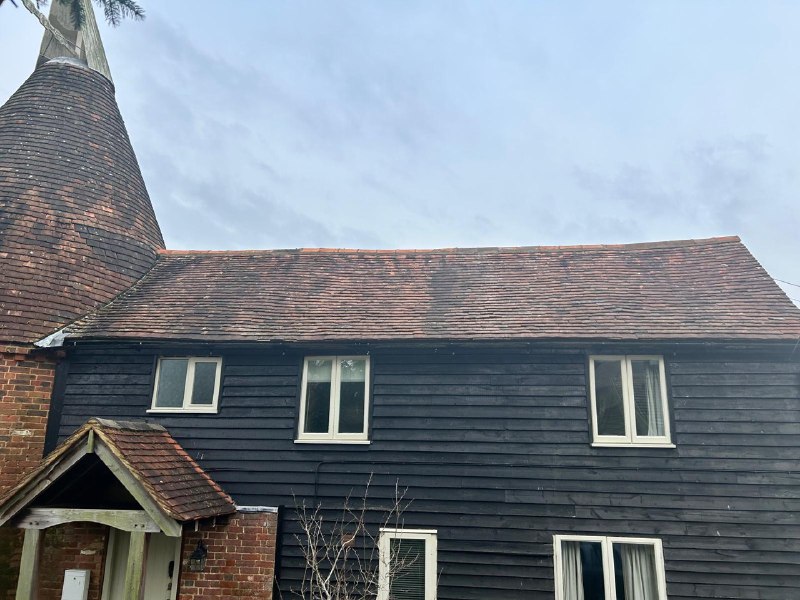
Discovering one roof leak is concerning enough, but finding signs of water ingress in several areas can raise a much bigger question: is the roof still suitable for repair, or has deterioration reached the point where replacement should be considered?
Multiple leaks can indicate widespread roofing problems, but they do not automatically mean that a complete new roof is necessary. Several internal damp areas may sometimes originate from one external defect, while separate leaks can also develop from a number of unrelated and individually repairable faults. For homeowners in Heanor, Derbyshire, the important step is establishing where water is entering, why the failures have developed and how much of the wider roof remains serviceable.
When Can Multiple Roof Leaks Point Towards the Need for Replacement?
The number of visible leaks is only part of the assessment. Their location, cause, frequency and relationship with the overall condition of the roof provide much more useful information.
A roof with several isolated defects surrounded by sound materials may remain suitable for targeted repairs. Replacement becomes more relevant when leaks are symptoms of widespread deterioration affecting numerous parts of the roofing system.
Several Internal Leaks May Have One External Cause
Water does not necessarily travel directly downwards after entering a roof.
Once beneath the covering, moisture can follow underlay, battens and structural components before becoming visible internally. One external weakness can therefore produce damp patches in more than one location.
This is why counting internal leaks is not a reliable way of deciding whether a roof needs replacement.
The external entry points need to be identified before the extent of the problem can be understood.
Separate Leaks Across Different Roof Areas Are More Significant
Multiple leaks deserve closer attention when investigation identifies several genuinely separate defects.
For example, one area may be affected by displaced tiles while another has deteriorating flashing or a problem around a roof junction. If each defect is localised and surrounding materials remain sound, individual repairs may still be entirely appropriate.
However, numerous unrelated failures developing within a relatively short period can indicate that several roofing components are deteriorating at the same time.
At that point, assessing the roof as a complete system becomes increasingly important.
Increasing Leak Frequency Can Reveal a Changing Roof Condition
Repair history provides useful context.
An occasional leak dealt with successfully over many years is very different from a roof that suddenly begins developing new leaks regularly. Increasing repair frequency can indicate that previously serviceable components are reaching a similar stage of deterioration.
Each new problem might appear repairable when considered alone.
Taken together, however, recurring failures can show that the overall reliability of the roof is declining and that continued isolated repairs deserve reconsideration.
Widespread Tile or Slate Deterioration Can Change the Decision
A successful local repair needs dependable materials around it.
If one cracked tile has caused a leak while neighbouring tiles remain secure, replacing the affected component can be a proportionate solution. The situation changes when cracking, slipping or deterioration is appearing throughout several roof slopes.
There may eventually be too little reliable surrounding material for repeated local repairs to remain sensible.
Widespread covering deterioration is therefore more relevant to the replacement decision than the number of leaks alone.
The Condition Beneath the Roof Covering Matters
Tiles and slates are only the visible part of the roofing system.
Battens, underlay, fixings and other supporting components also influence how effectively the roof performs. Several leaks can sometimes reveal that deterioration beneath the covering extends further than initially expected.
If underlying materials remain sound, repairs may be relatively contained.
Where deterioration affects extensive sections beneath several leaking areas, replacing a larger section or the complete roof may become more appropriate because another surface repair would not address the full problem.
Repeated Leaks From Previously Repaired Areas Need Investigation
A properly completed repair should deal with the identified cause of a leak.
If water repeatedly returns around the same area, the problem deserves further assessment rather than simply repeating the same intervention. The original source may not have been fully identified, or deterioration may extend beyond the section previously repaired.
Recurring leaks around several older repair areas can be particularly informative.
They may indicate that the remaining original roofing between those repairs is becoming less dependable, making a broader approach worth considering.
Multiple Failed Junctions Can Indicate General Deterioration
Leaks frequently develop around vulnerable roof details rather than through the main covering itself.
Valleys, roof-to-wall junctions, flashing and other transitions are responsible for managing water where different roofing elements meet. One defective junction can usually be considered independently.
When several different junctions begin failing, however, their overall condition should be assessed.
If deterioration is concentrated only within these details, renewing them may resolve the problem without disturbing serviceable roofing elsewhere. If similar deterioration is present throughout the roof, replacement becomes a more realistic consideration.
A Leak After Heavy Rain Does Not Automatically Mean Widespread Failure
The circumstances in which leaks appear can provide useful clues.
A particular combination of wind and rain may expose one weakness that remains unnoticed during ordinary conditions. Several damp marks appearing after the same period of weather do not necessarily prove that several separate sections have failed.
Professional investigation is valuable because it distinguishes symptoms from causes.
The decision should be based on identified defects rather than assuming that every visible damp area represents a separate roofing failure.
Localised Repairs Can Still Be Appropriate
Even when several leaks are present, repair can remain a sensible option where:
- each entry point can be clearly identified;
- defects are confined to limited areas;
- surrounding tiles or slates remain dependable;
- supporting roofing components remain serviceable;
- previous repairs are performing correctly;
- deterioration is not widespread across the roof;
- repairs can be completed without unnecessarily disturbing sound sections.
In these circumstances, there is little benefit in replacing roofing that continues to perform correctly.
When Does Full Replacement Become More Suitable?
Full replacement deserves greater consideration when the leaks form part of a broader pattern of deterioration.
This can include widespread failure of the covering, repeated problems across several roof slopes, extensive deterioration beneath the tiles or slates, and increasing numbers of defects appearing despite previous repairs.
Another important consideration is whether new repairs can be integrated reliably with the remaining roof.
If substantial areas of surrounding material are themselves approaching failure, repeatedly repairing individual leak points may no longer provide a coherent solution.
Replacement Does Not Always Need to Involve Every Roof Area
There is an important middle ground between a minor repair and complete roof replacement.
If deterioration is concentrated on one clearly defined roof slope or section, renewing that area may sometimes be more appropriate while other sections remain serviceable.
The extent of any replacement should therefore follow the extent of the deterioration.
This condition-based approach helps avoid both unnecessary replacement and repeated repairs to roofing that is no longer providing dependable performance.
Why Simply Repairing the Visible Damp Area Is Not Enough
An internal water stain shows where moisture has become visible, not necessarily where it entered.
Treating only the area directly above a damp patch can therefore miss the actual source. This becomes particularly problematic when several leaks are involved because water routes beneath the covering can overlap.
A proper roof assessment should trace likely entry points externally and examine the condition of surrounding components.
Accurate diagnosis is essential before deciding whether repairs or replacement are appropriate.
Roof Age Should Not Decide the Answer on Its Own
Older roofs can remain serviceable when their materials and supporting components are still performing correctly.
Similarly, a roof does not need to reach a particular age before significant deterioration can develop. Workmanship, exposure, previous maintenance and the condition of individual materials all influence performance.
Age should therefore provide context rather than determine the decision.
The current condition and pattern of failure are much more useful when deciding whether multiple leaks justify replacement.
A Detailed Roof Survey Can Prevent Unnecessary Replacement
Multiple leaks can understandably make a roof appear beyond repair, particularly when damp is visible in several rooms or areas.
A detailed assessment can sometimes reveal a less extensive problem. Several symptoms may relate to one defective section, or a handful of repairable components may be responsible while most of the roof remains sound.
Equally, an inspection can identify when deterioration genuinely is widespread.
This is why assessment should come before assumptions about replacement. The objective is to recommend work that reflects what the roof actually requires.
Professional Roof Assessment in Heanor, Derbyshire
At Heanor Roofing Repairs, we understand that multiple leaks need to be considered carefully before deciding on the appropriate solution.
Assessing the roof covering, previous repairs, junctions and signs of underlying deterioration can help establish whether the leaks are connected, individually repairable or symptoms of a more widespread roofing problem.
For property owners in Heanor, this approach provides a clearer basis for deciding whether targeted repairs, renewal of a larger section or full replacement is genuinely appropriate.
Conclusion
Multiple roof leaks can indicate that full replacement is needed, but the number of leaks alone should never determine the decision. Several damp areas may originate from one defect, while separate leaks can sometimes be repaired successfully when the surrounding roof remains in good condition.
Replacement becomes more appropriate when leaks are accompanied by widespread deterioration, recurring failures, unreliable surrounding materials or extensive problems beneath the roof covering. The pattern and cause of the defects are therefore more important than simply counting them.
If your property in Heanor, Derbyshire has developed multiple or recurring roof leaks, contact Heanor Roofing Repairs. We can assess the condition of the roof and recommend an appropriate repair or replacement approach based on the extent of the deterioration.
Call us on: 01773 300 896
Click here to find out more about Heanor Roofing Repairs
Click here to complete our contact form and see how we can help with your roofing needs.