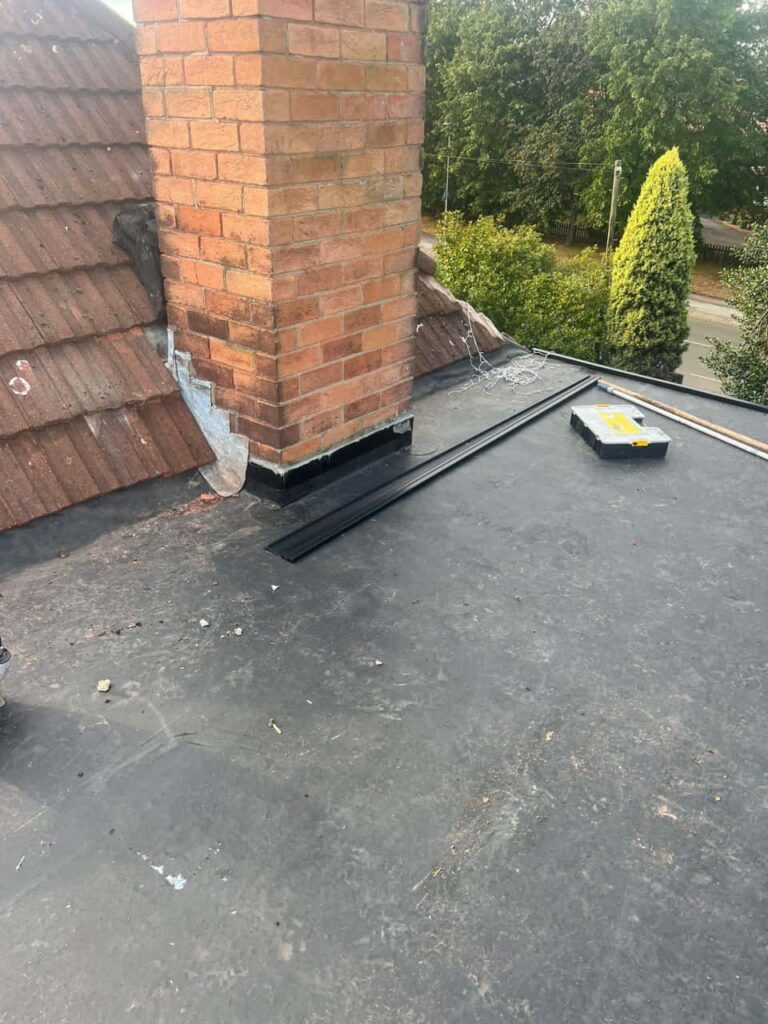
A damp patch or dripping ceiling may make a roof leak appear easy to locate. In reality, the point where water becomes visible indoors can be some distance from the defect that allowed it to enter.
Water can travel along roofing materials, underlay, rafters and ceiling timbers before reaching the room below. For property owners in Heanor, Derbyshire, understanding this behaviour explains why effective roof leak detection requires a thorough inspection rather than simply examining the area above the drip.
Why the Visible Drip May Not Reveal the Roof Defect
A roof is made up of several overlapping components designed to work together. If one component becomes damaged, water may enter beneath the outer covering and follow the easiest available route through the roof structure.
Gravity generally carries water downwards, but roof pitches, timbers, fixings and insulation can also direct it sideways. The resulting stain may therefore appear below a completely different section of the roof.
Water Can Travel Beneath Tiles and Slates
Tiles and slates form the roof’s main weather-resistant covering, but they are supported by battens and an underlay beneath. If a tile slips, cracks or becomes loose, water may pass underneath and run down the underlay before finding an opening.
The internal drip may appear where the underlay is torn, where water reaches a fixing or where it collects against another component. Looking directly above the damp patch could therefore lead to the wrong section being repaired.
Roof Timbers Can Redirect Moisture
Once water enters a roof space, it may follow rafters, battens or other timbers. These surfaces can carry moisture away from its original entry point before it falls onto insulation or ceiling materials.
This is especially common where the roof has a complex structure or where only a small amount of water is entering. Timber may become damp gradually, allowing the leak to remain hidden until a ceiling stain develops.
Wind-Driven Rain Changes the Direction of Water
Roofing systems are designed primarily to shed water downwards. During windy conditions, however, rain can be forced beneath loose materials, around poorly sealed junctions or through small gaps that remain dry during calmer weather.
This explains why some roofs only leak when rain falls from a particular direction. The position of the visible moisture may change depending on the strength and angle of the wind, making the original defect harder to identify.
Several Roof Components Can Produce Similar Symptoms
A ceiling stain does not immediately identify which roofing component has failed. Water may be entering through:
- cracked or displaced tiles
- deteriorated mortar around ridges or verges
- damaged leadwork
- defective roof valleys
- worn seals around roof penetrations
- splits in the underlay
- poorly sealed junctions
- blocked or damaged rainwater outlets
Each problem can create a similar damp patch indoors. A successful repair depends on identifying the correct cause rather than treating the most obvious symptom.
The Leak May Only Appear in Certain Conditions
Some defects allow water to enter only during prolonged or heavy rainfall. A small opening may remain dry during a brief shower but admit moisture once water builds up or flows across it continuously.
Other leaks depend on wind direction, rainfall intensity or the amount of water moving through a valley or around a junction. Understanding when the leak occurs can provide valuable clues during an inspection.
Useful observations include whether the damp appears:
- during heavy rain
- after several hours of lighter rain
- when rain is accompanied by strong wind
- immediately or several hours after rainfall
- in the same position every time
This information can help narrow down the likely route of entry.
Previous Repairs Can Hide the Wider Problem
A roof may continue leaking after a local repair because the original source was misidentified or because more than one defect is present. Sealing the area nearest to an internal stain may not stop water entering higher up the roof.
Repeated patching can also make diagnosis more complicated. Different materials and repair methods may change the path water follows without resolving the underlying weakness. A wider inspection is often necessary when a leak keeps returning.
What Professional Leak Detection Involves
Professional roof leak detection considers the roof as a complete system. The inspection should include the visible covering and the components most likely to allow water entry.
Depending on the roof design and the symptoms, this may involve examining:
- tiles or slates and their fixings
- ridges, hips and verges
- valleys and drainage channels
- lead flashing and roof junctions
- chimneys and other penetrations
- underlay and battens
- accessible timbers inside the roof space
- previous repair areas
The objective is to trace the likely path of the water from the internal evidence back to its actual source.
Why Accurate Diagnosis Supports a Lasting Repair
A repair can only be dependable when it addresses the defect responsible for the leak. Replacing an apparently damaged tile may not help if water is entering through nearby leadwork, while sealing an internal gap does nothing to prevent further moisture entering the roof.
Accurate diagnosis helps ensure that the correct materials and repair method are used. It can also reveal whether moisture has affected surrounding areas that are not immediately visible from inside the property.
Conclusion
Finding the source of a roof leak requires more than looking above the point where water drips. Moisture can travel beneath roof coverings, along timbers and through layers of the roof structure before becoming visible indoors.
Rain intensity, wind direction and the condition of several connected roofing components can all influence where a leak appears. A detailed inspection is therefore essential for distinguishing the true entry point from the final location of the water.
If you have discovered a recurring drip or damp patch at your property in Heanor, Derbyshire, Heanor Roofing Repairs can assess the roof and identify the underlying source. Contact the team to arrange a professional inspection and discuss the appropriate repair.
Call us on: 01773 300 896
Click here to find out more about Heanor Roofing Repairs
Click here to complete our contact form and see how we can help with your roofing needs.