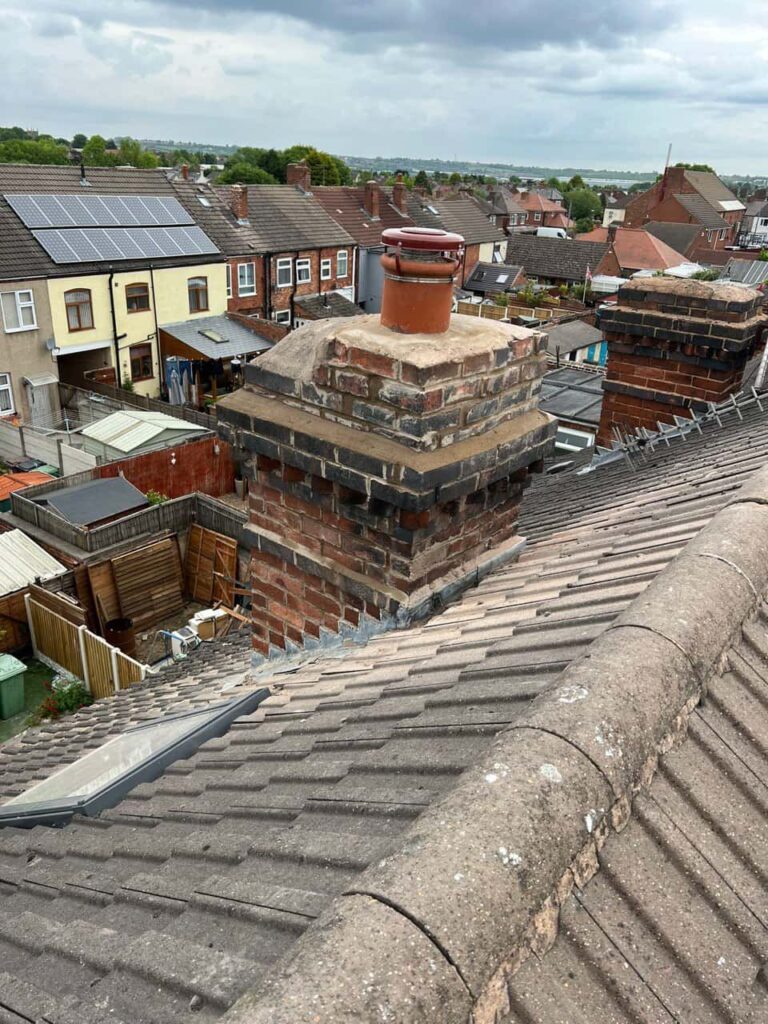
A visual check from the garden can reveal an obviously missing tile or a damaged gutter, but many roofing defects are too small, concealed or poorly positioned to be seen from ground level. Some problems develop beneath the roof covering, while others affect areas hidden behind chimneys, parapets or changes in the roof’s shape.
Recognising these limitations is important. A roof may appear sound from below even though water is entering through a minor defect. Professional inspection allows the roof to be assessed more closely so that the source and extent of deterioration can be established before the correct repair is recommended.
Roof Problems That May Not Be Visible from the Ground
The following defects can be difficult to identify without appropriate access, experience and a methodical inspection.
Hairline Cracks in Roof Tiles
A tile does not have to be completely broken to allow water beneath the covering. Fine cracks can develop through weathering, impact or movement, yet remain almost invisible when viewed from below.
Moisture may gradually pass through the damaged tile and reach the underlay or battens. As the defect worsens, the crack can widen and leave the surrounding roof more exposed.
Slightly Displaced or Loose Tiles
A slipped tile may be easy to recognise once it has moved significantly. Earlier movement can be much harder to see. A tile may have shifted just enough to affect its overlap while still appearing aligned from ground level.
Loose fixings can create a similar problem. Although the tile remains in position, it may move during windy conditions and allow rainwater to enter beneath the covering.
Deteriorated Flashing
Flashing protects vulnerable junctions around chimneys, roof abutments and other transitions. Small splits, lifted edges and weakened joints are often difficult to identify from a distance.
Water entering through defective flashing may travel along roofing materials before appearing inside the property. This means an internal damp patch is not always directly beneath the original defect.
Damage Around Ridges, Hips and Verges
Ridge tiles, hip tiles and verge details are exposed to wind and weather. Cracked mortar, failed fixings or small gaps may develop without producing an obvious change in appearance from below.
These components protect important roof edges and junctions. If deterioration is overlooked, water and wind may begin affecting nearby tiles and supporting materials.
Valley and Roof-Junction Defects
Valleys carry substantial amounts of rainwater where two roof slopes meet. Debris, corrosion, cracks or poorly sealed joints can interrupt this drainage route, but the affected area may be hidden by the surrounding tiles.
Roof junctions around extensions, dormers and changes in pitch also contain detailed weatherproofing. Even a relatively small failure can create persistent water ingress.
Damaged Underlay and Battens
The underlay and battens sit beneath the external roof covering, making their condition impossible to judge from the ground. Underlay can tear, sag or become brittle, while timber battens may weaken after prolonged exposure to moisture.
A roof can therefore look reasonably intact externally while the supporting layers beneath it are deteriorating. Where accessible, checking the roof space can provide useful evidence, but a complete assessment may require closer external inspection.
Flat Roof Cracks and Failed Seams
Small punctures, open seams, blistering and surface splits on a flat roof are rarely visible from below. Standing water can also remain concealed if the roof is hidden behind an edge detail.
These defects need to be examined carefully because the visible signs inside the building may be some distance from the point where water first entered.
Blocked or Defective Roof Drainage
Leaves, moss and other debris can collect in gutters, outlets and hidden drainage channels. From ground level, the system may appear clear even though water is being held back elsewhere.
During rainfall, restricted drainage can cause water to overflow, collect against roof edges or reach areas not designed for prolonged exposure. The condition and alignment of gutters should therefore be considered as part of the wider roof assessment.
Early Signs of Timber Movement
Changes in rafters, roof decking or other structural timbers may initially be subtle. A slight dip in the roofline can be difficult to recognise without comparison and closer examination.
Inside the roof space, warning signs may include damp timber, staining, distorted components or visible daylight. These findings help determine whether an external defect has affected more than the roof covering.
Why the Location of a Leak Can Be Misleading
A damp ceiling does not reliably identify the precise location of a roofing fault. Water can travel along underlay, rafters, battens and other surfaces before dripping into the room below.
Simply inspecting the area directly above an internal mark can therefore result in the actual entry point being missed. Effective leak detection follows the likely path of moisture and checks vulnerable components across the surrounding roof.
The Value of a Professional Roof Inspection
A professional inspection considers how the roof works as a complete system. Tiles, flashing, junctions, drainage, underlay and supporting materials must all direct water away from the property effectively.
At Heanor Roofing Repairs, we assess the visible damage alongside the less obvious details that may be contributing to the problem. This helps avoid guesswork and allows any recommended repair to address the cause rather than only the symptom.
Conclusion
Many important roof defects cannot be identified reliably from ground level. Hairline cracks, loose tiles, failing flashing, hidden valley damage and deterioration beneath the covering may all remain unnoticed until a leak becomes apparent.
If you have spotted damp, tile movement or another possible roofing problem at your property in Heanor, Derbyshire, contact Heanor Roofing Repairs to arrange a professional assessment. A careful inspection can clarify the cause and determine the most appropriate repair before the damage develops further.